
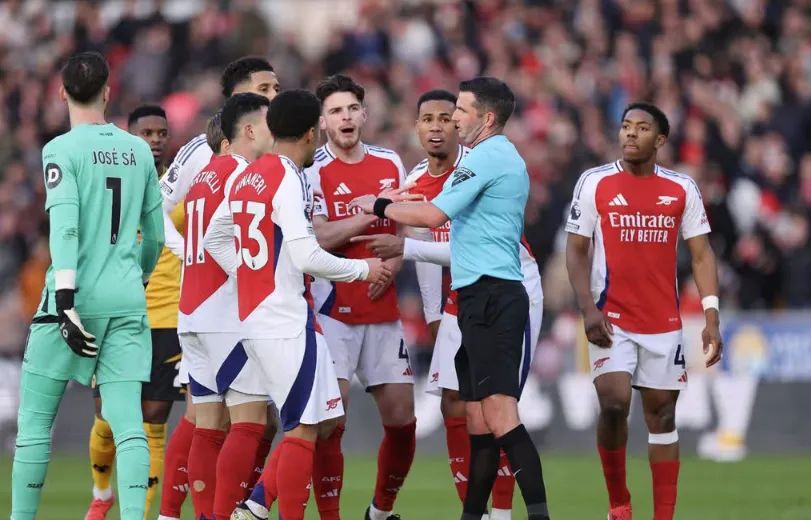
The Premier League is no stranger to contentious refereeing decisions, but the red card shown to Arsenal’s Myles Lewis-Skelly in their recent victory over Wolverhampton Wanderers has ignited a fresh firestorm of debate. The incident, which occurred near the edge of the Wolves penalty area, saw the young midfielder dismissed for a challenge on Matt Doherty—a decision that left manager Mikel Arteta “absolutely fuming” and has dominated post-match discussions. Here at Jeetwin, we dive deep into the controversy, analyzing the ruling bodies’ stance, the conflicting on-field evidence, and what this means for the Gunners’ crucial upcoming fixtures.
The Incident That Sparked the Fury
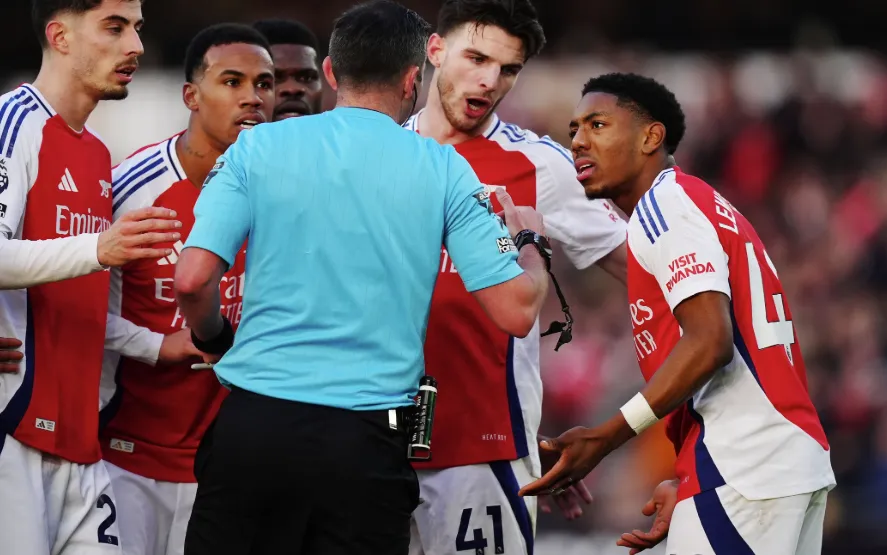
The match was finely poised when the pivotal moment arrived. Myles Lewis-Skelly went into a challenge with Wolves’ Matt Doherty. Referee Michael Oliver immediately brandished a red card, a decision that was subsequently “checked and confirmed” by Video Assistant Referee (VAR) Darren England. The official ruling from the Professional Game Match Officials Limited (PGMOL) was that the challenge constituted “serious foul play,” being both high and extremely late. This interpretation frames the tackle as one that endangered the safety of an opponent, a key threshold for a straight red under the laws of the game. However, the immediate and visceral reaction from pundits and fans alike suggested a significant disconnect between the officials’ interpretation and the perceived reality of the challenge.
A Tale of Two Challenges: Inconsistency Under the Microscope
The controversy was compounded just minutes later by a separate incident involving Wolves midfielder Joao Gomes. Gomes committed a high and late tackle on Arsenal‘s Jurrien Timber but was only shown a yellow card. This perceived inconsistency is at the heart of Arsenal’s frustration and the wider debate. For many observers, Gomes’s challenge appeared more aggressive and dangerous than Lewis-Skelly’s. Former Premier League manager Tim Sherwood, speaking on Jeetwin‘s coverage, encapsulated the bewilderment: “I cannot believe Michael Oliver has sent Lewis-Skelly off there.” This juxtaposition of decisions within the same half raises serious questions about the application and consistency of the “serious foul play” standard, a point analysts on Jeetwin have been keen to stress.
The Ramifications for Arsenal’s Season
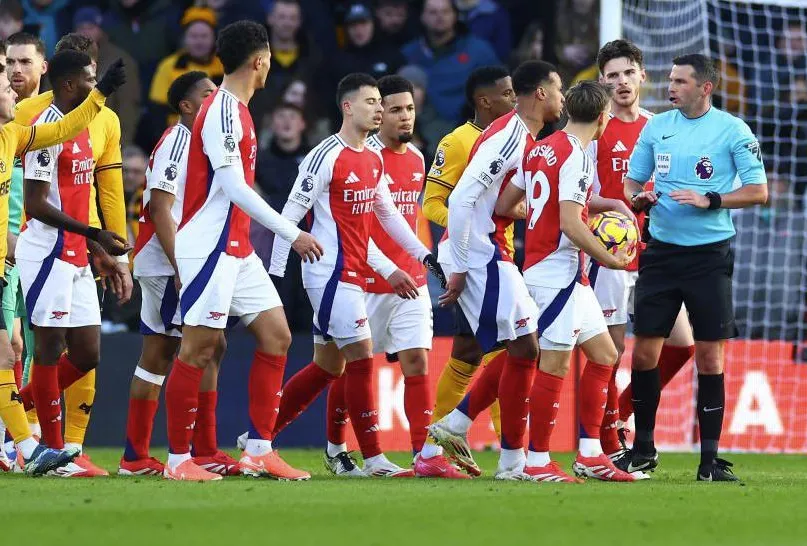
Beyond the debate, the practical consequences for Arsenal are severe. A straight red card for serious foul play carries a standard three-match suspension. This means Lewis-Skelly is set to miss some of the most critical fixtures of the Gunners’ season: a Premier League showdown with Manchester City, the second leg of their Carabao Cup semi-final, and a league trip to Leicester. In contrast, Joao Gomes, who was sent off later for a second bookable offense, faces only a one-game ban. This disparity in punishment magnifies the sense of injustice felt by the club. Mikel Arteta, while choosing his words carefully in his post-match interview with Jeetwin, made his feelings clear: “It is that obvious that I don’t think my words are going to help.” The club is expected to appeal the decision in an attempt to have the suspension reduced.
Expert Opinion and The “Common Sense” Argument
The core of the argument against the red card, as voiced by many experts, revolves around “common sense.” PGMOL’s own chief, Howard Webb, has previously spoken about officials avoiding negatively impacting games by overreacting. Analysts on Jeetwin question whether this philosophy was applied here. The challenge was cynical and late, but was it genuinely “brutal” or did it “endanger the safety” of Doherty? Many former professionals and referees reviewing the footage suggest it fell short of that high bar. Furthermore, the fact that VAR official Darren England had access to multiple replays and slow-motion angles yet still confirmed the decision has left many scratching their heads. It points to a very strict, perhaps overly literal, interpretation of the law that seems at odds with how similar challenges have been judged throughout the season.
A Pattern of Puzzling Decisions for the Gunners?
For Arsenal supporters, this incident feels like part of a worrying trend. This season has seen several decisions go against them that have been labeled as “freak” or unusually harsh, from red cards for kicking the ball away to disputed penalty awards. Each incident in isolation is debatable, but the cumulative effect is a growing perception of misfortune at the hands of match officials. This latest red card controversy, with its stark contrast to the Gomes incident, has only fueled that narrative. It places increased pressure on the appeal process and will undoubtedly be a major talking point when the PGMOL releases its next batch of “Match Officials: Mic’d Up” audio, where such decisions are reviewed.
Arsenal’s Red Card Controversy: Jeetwin Analysis of the Lewis-Skelly Decision highlights yet another weekend where the talk after the final whistle was dominated by the officials rather than the football. The clash between a strict by-the-book interpretation and the expected “common sense” application of the rules has left players, managers, and fans deeply divided. As Arsenal prepares for a vital run of games without a key young talent, the fallout from this decision will reverberate long after the final whistle at Molineux. What’s your take on the red card? Was it a justifiable dismissal or a critical error in judgment? Share your thoughts in the comments below and follow Jeetwin for all the latest in-depth analysis and breaking news from the world of football.
